

The MOVE program began as a pilot in 2014 to reduce vacancies in Class A and B office space by helping businesses locate, relocate, or expand in Montgomery County. In November 2024, the county expanded eligibility to include certain existing businesses adding commercial space, according to the Montgomery County Department of Finance’s 2025 annual report, published in 2026.
Of the 50 awards made in 2025, 22 went to expansions by businesses already in the county, compared with eight relocations. This shows that the program now supports businesses already operating in the county, not just those moving in. That distinction matters when evaluating whether economic development incentives meet the needs of both new and existing businesses. However, these awards do not establish how many businesses would otherwise have relocated or closed.
What the Committee Reviewed
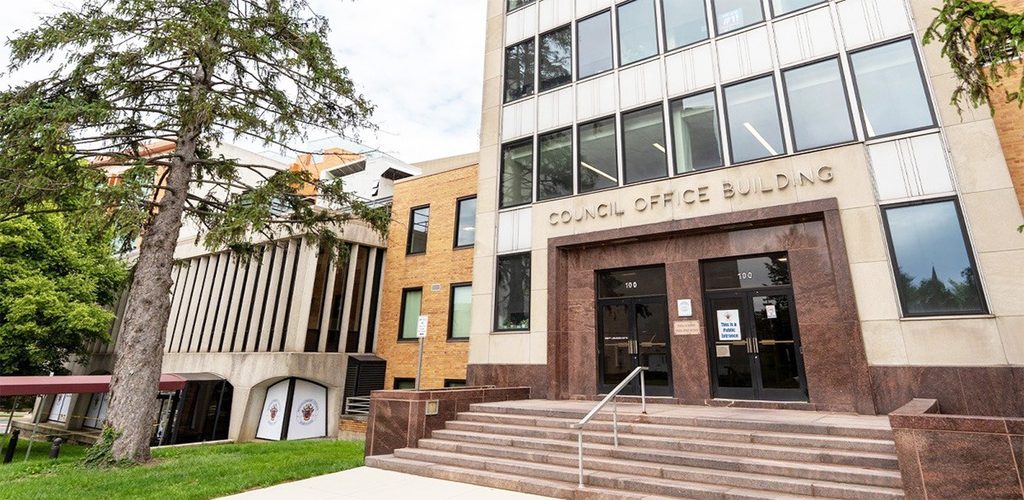
On October 12, 2026, the Montgomery County Council’s Economic Development Committee held a work session reviewing the Economic Development Fund (EDF). The fund received $4.2 million in FY2027 funding, according to the Council’s October 7 staff report. Its ongoing programs include the Grant and Loan Program, which supports job retention and creation. The separate J.O.B.S. initiative also established a Job Creation Fund to encourage employers to create qualifying high-paying jobs.
Attracting a business means encouraging a new company to open or relocate here. Retaining one means helping an existing business sustain its operations and expand. An incentive designed to attract new businesses may not address the needs of an existing business trying to stay and grow. For example, assistance with lease costs can encourage a company to occupy vacant office space, while workforce training can help an established employer retain and develop its employees.
Finding and Keeping Qualified Workers
The Job Creation Fund was designed to provide employers with up to $10,000 for each qualifying new job, or $12,000 for jobs in designated disadvantaged areas. Employers had to create at least five full-time, permanent positions paying $100,000 or more and keep those positions filled for six months to qualify. The October 7 staff report stated that the initiative’s funding had been exhausted.
Financial incentives can encourage job creation, but they do not guarantee access to qualified employees. Employers also need workers with the skills their positions require and opportunities to develop and retain experienced staff.
Workforce development is another part of the picture. SkillUp Montgomery offers more than 200 professional certifications at no cost to eligible residents. Employers with 20 or fewer employees can also use the program to upskill their staff, according to the Montgomery County Economic Development Corporation’s 2025 account.
What the Review Raised About Reach and Results
According to the Council’s October 7 staff report, MOVE had stopped accepting new applications, with approximately $63,125 remaining after accounting for existing commitments. Options considered during the review included lowering maximum awards, prioritizing quality jobs and strategic industries, adding location criteria, and strengthening return-on-investment reporting. These were options under discussion, not adopted decisions.
The county’s annual report also notes that MOVE job figures are projections, not independently verified outcomes, and are not subject to an enforceable job-creation requirement. The meeting summary reports discussion about making the fund’s results easier to track through consistent reporting and regular updates.
The number of businesses receiving incentives does not necessarily establish how many businesses were retained or how many jobs were actually created.
Together, these points raise two practical questions: Can existing businesses access the support they need, and can the county demonstrate what its economic development programs deliver?
Keeping businesses in Montgomery County requires more than attracting new ones. It also means ensuring that existing businesses can access meaningful support and that public investments produce measurable results.
Our three pillars at CERG PAC 2.0 are Housing, Jobs and Workforce Development, and Business Ownership & Entrepreneurship. We believe Black-owned businesses can help create jobs and build community wealth. For that to happen, business owners need opportunities to establish, sustain, and grow their businesses in the county.
If you run, work for, or support a Montgomery County business, tell us in the comments: What would make local support easier to access, and what results should it deliver?
References
Govly. (2026, October 12). Oct 12, 2026: ECON Committee work session
Montgomery County Council. (2026a, October 12). Economic Development Committee meeting agenda
Montgomery County Council. (2026b, October 7). Economic Development Fund policy considerations
Montgomery County Department of Finance. (2026). Economic Development Fund annual report for calendar year 2025.
Montgomery County Economic Development Corporation. (n.d.). Job Creation Fund FAQs.
Montgomery County Economic Development Corporation. (2025, April 29). Mobilize Montgomery connects federal workers and businesses with resources. ThinkMoco.
Montgomery County Economic Development Corporation, & Montgomery Planning. (2026, May). Quarterly economic indicators briefing: Q4 2025.

About CERG 2.0 PAC
The Coalition for Equitable Representation in Government (CERG 2.0) is a political action committee committed to advancing inclusive economic growth in Montgomery County, Maryland, with a continued focus on strengthening Black communities and businesses.
We believe economic advancement requires more than conversation. It requires action, advocacy, and leadership that delivers measurable results.